Noticias

El viaje alrededor del mundo del avión solar

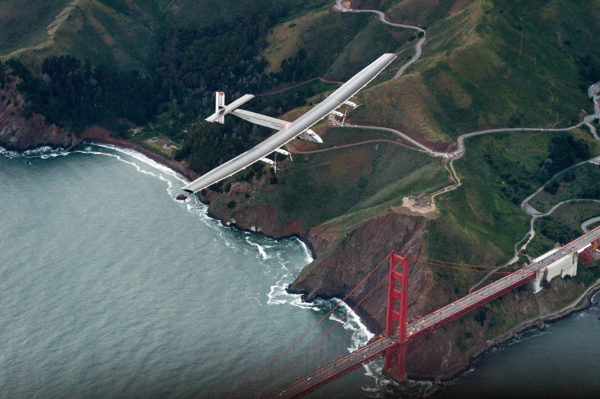
El Solar Impulse 2 es un avión impulsado por energía solar, equipado con más de 17.000 células solares, pesa 2.4 toneladas con una envergadura de 72 metros. El viaje fue muy largo, 505 días para recorrer 42.000 km, a una velocidad media de 70 kilómetros por hora. Los pilotos Bertrand Piccard y André Borschberg aterrizaron con éxito el avión en Abu Dabi. Aquí veremos un resumen en imágenes.
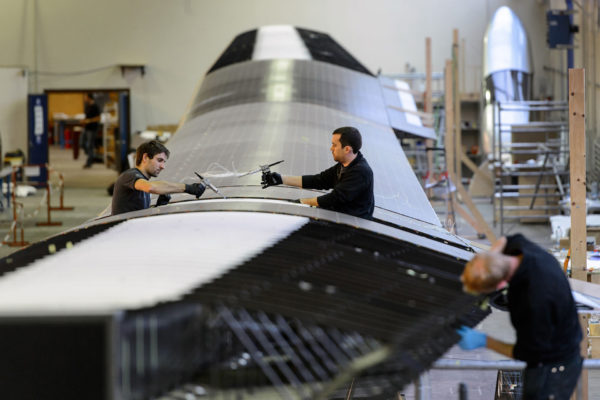
Engineers work on the carbon-fibre 72 metres long wing of Swiss sun-powered aircraft Solar Impulse HB-SIB in construction on December 17, 2013 at the former military airport of Duebendorf, near Zurich. After this years flight across the United States with Solar Impulse HB-SIA prototype aircraft, a new larger plane is being built and expected to fly around the world in 2015. AFP PHOTO / FABRICE COFFRINI        (Photo credit should read FABRICE COFFRINI/AFP/Getty Images)

Los ingenieros trabajan en la fibra de carbono de 72 metros de largo del ala del avión alimentado por energía solar, el 17 de diciembre, 2013 en el antiguo aeropuerto militar de Duebendorf, cerca de Zurich (AFP).
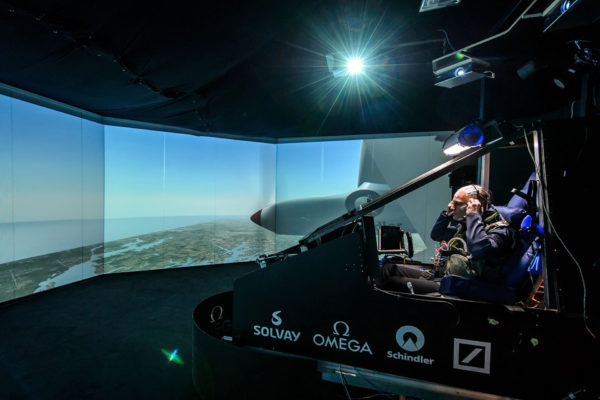
Swiss scientist-adventurer and pilot Bertrand Piccard sits in the near-exact reconstruction of the cockpit of the sun-powered aircraft Solar Impulse HB-SIB at the beginning of a non-stop 72 hours simulation test flight inside on December 17, 2013 at the former military airport of Duebendorf, near Zurich. The goal of the experience is to prepare Piccard and pilot Andre Borschberg for their 2015 long-duration round-the-world flights. AFP PHOTO / FABRICE COFFRINI        (Photo credit should read FABRICE COFFRINI/AFP/Getty Images)

El simulador de vuelo que se armo especialmente para el entrenamiento de los pilotos, el 17 de diciembre de 2013. El objetivo de la experiencia es preparar a Piccard y André Borschberg para sus próximos vuelos alrededor del mundo de larga duración (AFP).
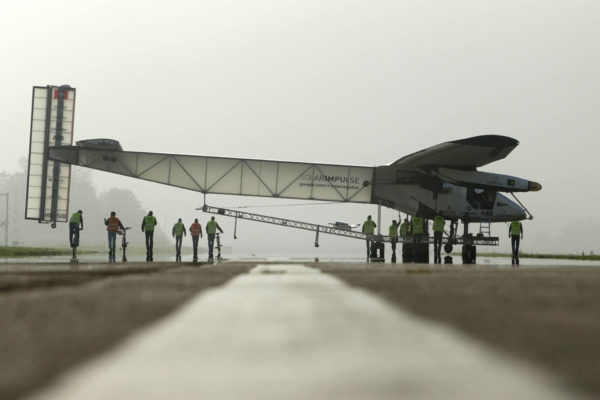
The Solar Impulse 2 aircraft is pulled out of its base for tests by pilot Bertrand Piccard in Payerne, November 1, 2014.  The aircraft weighs 2.4 tons with a wingspan of 72 meters, fitted with more than 17,000 solar cells. The attempt to fly around the world in stages using only solar energy will be made in 2015. REUTERS/Pierre Albouy  (SWITZERLAND - Tags: TRANSPORT ENVIRONMENT SCIENCE TECHNOLOGY) - RTR4CGCU

El Solar Impulse 2 durante la fase de pruebas en Payerne, 1 de Noviembre, 2014 (Reuters).
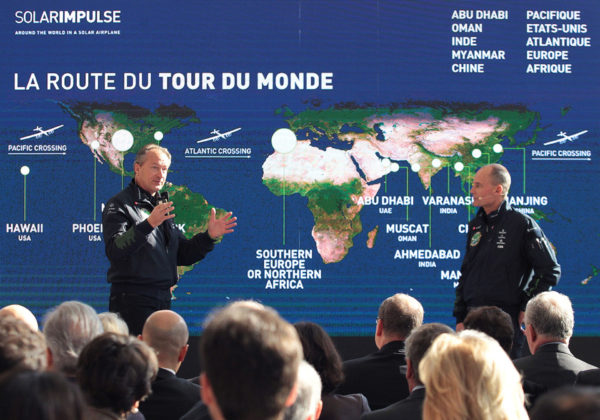
Switzerland's Andr? Borschberg (L) and Bertrand Piccard (R), Solar Impulse founders and pilots, present the new Monaco Solar Impulse control center, on February, 10, 2015, in Monaco. The privately-financed project Solar Impulse hopes to achieve the first circumnavigation of the Earth by a piloted fixed-wing aircraft using only solar power. This circumnavigation is scheduled to begin in March 2015 in Abu Dhabi in the United Arab Emirates and to return there five months later. AFP PHOTO / JEAN CHRISTOPHE MAGNENET        (Photo credit should read JEAN CHRISTOPHE MAGNENET/AFP/Getty Images)

Andre Borschberg y Bertrand Piccard, los fundadores de Solar Impulse y pilotos, presentando el centro de control, febrero 10 de 2015, en Mónaco (AFP).
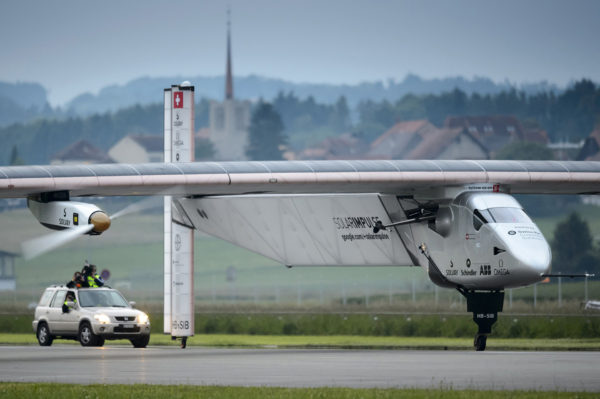
German test pilot Markus Scherdel lands the new experimental aircraft "Solar Impulse 2", after its first flight at the airbase in Payerne, Switzerland, on June 2, 2014. The aircraft, which was unveiled April 9, 2014 weighs 2.4 tons with a wingspan of 72 meters and more than 17,000 solar cells. The attempt to fly around the world in stages using only solar energy will be made in 2015. AFP PHOTO / POOL / LAURENT GILLIERON        (Photo credit should read LAURENT GILLIERON/AFP/Getty Images)

El piloto de pruebas alemán Markus Scherdel aterriza el nuevo avión experimental “Solar Impulse 2”, después de su primer vuelo en la base aérea de Payerne, Suiza, el 2 de junio, 2014 (AFP).
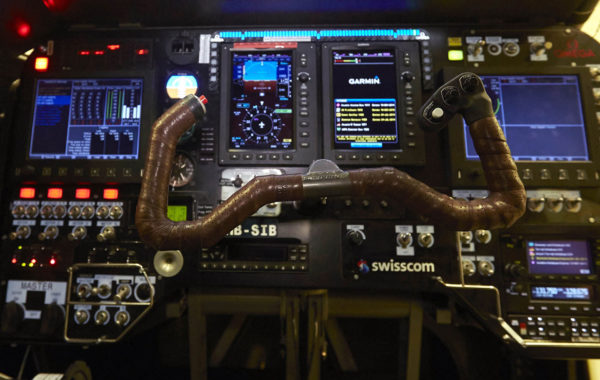
The cockpit of the solar-powered Solar Impulse 2 aircraft is pictured after a training flight at its base in Payerne November 8, 2014. From left to right instruments are : fuses, throttle, power management, autopilot, motor control, flying instruments and telecomunication. The aircraft, which was unveiled April 9, weighs 2.4 tons with a wingspan of 72 meters (236 ft.) and more than 17,000 solar cells. The attempt to fly around the world in stages using only solar energy will be made from March 2015 starting from Abu Dhabi. REUTERS/Denis Balibouse  (SWITZERLAND - Tags: TRANSPORT ENVIRONMENT SCIENCE TECHNOLOGY) - RTR4DDPX

Así es el panel de instrumentos del Solar Impulse 2 (Reuters).
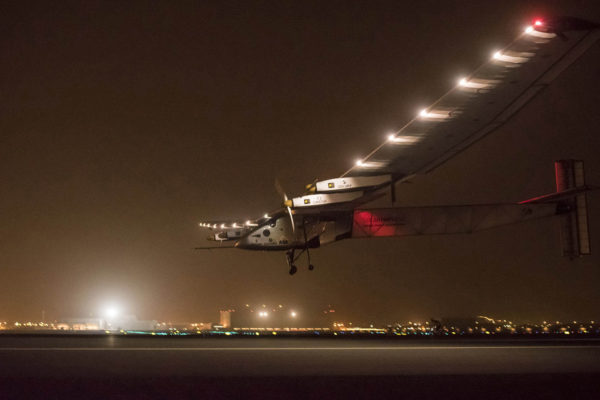
"Solar Impulse 2" descends to land in Muscat March 9, 2015. Two pilots attempting the first flight around the world in a solar-powered plane began the maiden leg of their voyage on Monday, the mission's official website said.  "Solar Impulse 2" took off from Abu Dhabi in the United Arab Emirates en route to the Omani capital Muscat at the start of a five-month journey of 35,000 km (22,000 miles) organised to focus the world's attention on sustainable energy. REUTERS/Jean Revillard/Handout via Reuters (OMAN - Tags: TRANSPORT SCIENCE TECHNOLOGY ENVIRONMENT) ATTENTION EDITORS - FOR EDITORIAL USE ONLY. NOT FOR SALE FOR MARKETING OR ADVERTISING CAMPAIGNS. THIS PICTURE WAS PROVIDED BY A THIRD PARTY. REUTERS IS UNABLE TO INDEPENDENTLY VERIFY THE AUTHENTICITY, CONTENT, LOCATION OR DATE OF THIS IMAGE. THIS PICTURE IS DISTRIBUTED EXACTLY AS RECEIVED BY REUTERS, AS A SERVICE TO CLIENTS - RTR4SOBD

El “Solar Impulse 2” desciende en Muscat, el 9 de marzo de 2015. El avión despegó de Abu Dhabi, en los Emiratos Árabes Unidos para iniciar un viaje de cinco meses (Reuters).
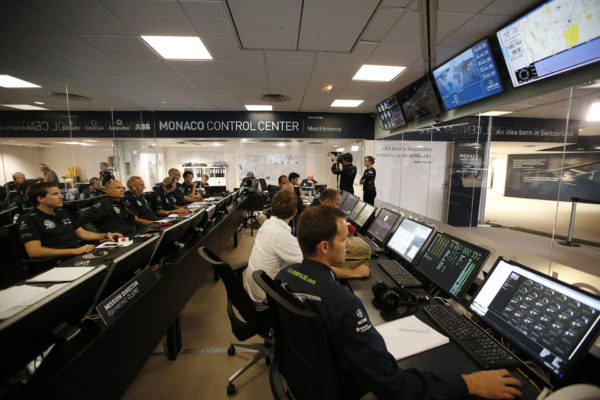
(From L) Deniz Borschberg, the son of the Swiss pilot flying the Solar Impulse 2, Bertrand Piccard, the initiator, chairman and one of the pilots of Solar Impulse 2 and Solar Impulse mission director Raymond Clerc sit at the Mission Control Center for the Solar Impulse flight in Monaco on June 1, 2015, as the Solar Impulse 2 makes its landing in Japan. The record-breaking Solar Impulse 2 flown by Swiss pilot Andre Borschberg landed safely in Nagoya, Japan on June 1, on an unscheduled stop caused by bad weather over the Pacific. AFP PHOTO / VALERY HACHE        (Photo credit should read VALERY HACHE/AFP/Getty Images)

Deniz Borschberg, el hijo del piloto suizo, Bertrand Piccard, iniciador, presidente y el director de la misión Raymond Clerc, sentados en el Centro de Control de Misión en Mónaco 1 junio de 2015, mientars el Solar Impulse 2 hace su aterrizaje en Japón (AFP).
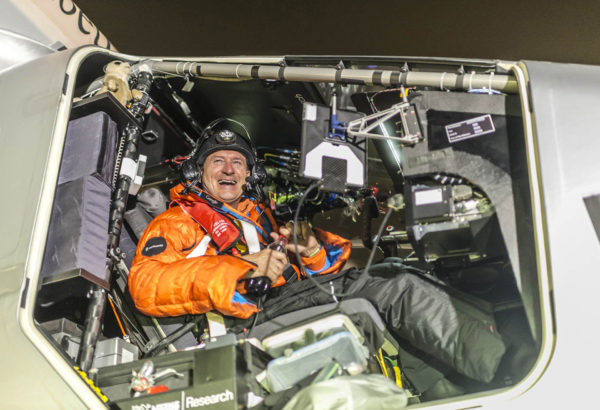
Pilot Andre Boschberg reacts after he landed "Solar Impulse 2" in Muscat March 9, 2015. Two pilots attempting the first flight around the world in a solar-powered plane began the maiden leg of their voyage on Monday, the mission's official website said.  "Solar Impulse 2" took off from Abu Dhabi in the United Arab Emirates en route to the Omani capital Muscat at the start of a five-month journey of 35,000 km (22,000 miles) organised to focus the world's attention on sustainable energy. REUTERS/Jean Revillard/Handout via Reuters (OMAN - Tags: TRANSPORT SCIENCE TECHNOLOGY ENVIRONMENT) ATTENTION EDITORS - FOR EDITORIAL USE ONLY. NOT FOR SALE FOR MARKETING OR ADVERTISING CAMPAIGNS. THIS PICTURE WAS PROVIDED BY A THIRD PARTY. REUTERS IS UNABLE TO INDEPENDENTLY VERIFY THE AUTHENTICITY, CONTENT, LOCATION OR DATE OF THIS IMAGE. THIS PICTURE IS DISTRIBUTED EXACTLY AS RECEIVED BY REUTERS, AS A SERVICE TO CLIENTS - RTR4SOB0

El piloto iloto André Borschberg (Reuters).
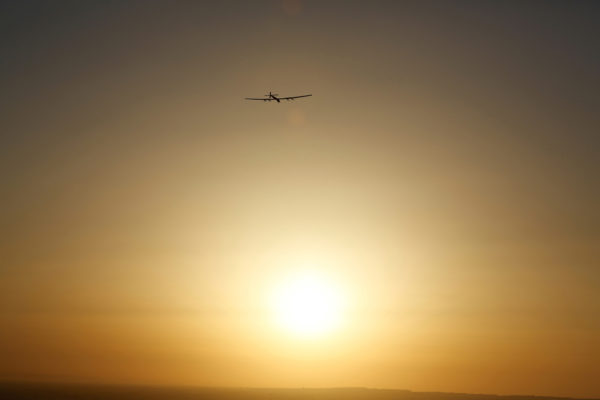
The solar-powered plane Solar Impulse 2, piloted by Swiss aviator Bertrand Piccard, flies before landing at San Pablo airport in Seville, southern Spain June 23, 2016.   REUTERS/Marcelo del Pozo - RTX2HQ93

Aquí la nave antes de aterrizar en el aeropuerto de San Pablo de Sevilla, sur de España, el 23 de junio, el año 2016 (Reuters).
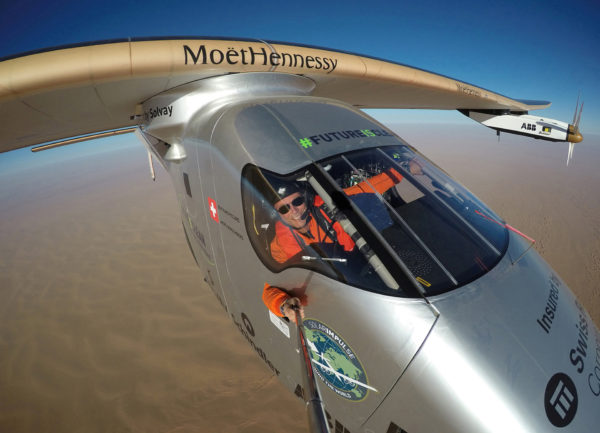
Selfie picture shows Swiss pioneer Bertrand Piccard during the last leg of the round the world trip with Solar Impulse 2 over the Arab peninsula July 25, 2016. Picture taken July 25, 2016. Jean Revillard, Bertrand Piccard/SI2/Handout via Reuters ATTENTION EDITORS - THIS IMAGE WAS PROVIDED BY A THIRD PARTY. FOR EDITORIAL USE ONLY. NO RESALES. - RTSJNKM

El último tramo del viaje alrededor del mundo sobre la Península Arábiga el 25 de julio el año 2016 (Reuters).
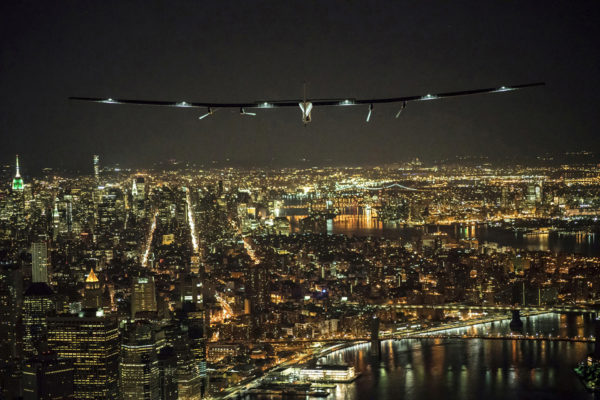
Solar Impulse 2, the solar airplane, piloted by Swiss adventurer Andre Borschberg, flies over Manhattan, U.S. on June 11, 2016 shortly before landing at John F. Kennedy airport. Leg 14 was the shortest so far on the planes trip around the globe. Andre Borschberg, Jean Revillard/SI2/Handout via Reuters/File Photo   ATTENTION EDITORS - THIS IMAGE WAS PROVIDED BY A THIRD PARTY. FOR EDITORIAL USE ONLY. - RTSJNRF

Sobrevolando Manhattan el 11 de junio de 2016 (Reuters).
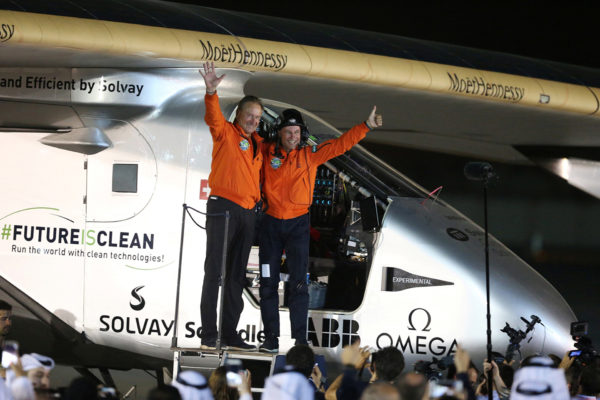
Pilots Andre Borschberg (L) and Bertrand Piccard celebrate after their arrival on Solar Impulse 2, a solar powered plane, at an airport in Abu Dhabi, United Arab Emirates July 26, 2016. REUTERS/Stringer  - RTSJMET

Los pilotos Andre Borschberg y Bertrand Piccard celebran después de su llegada a Abu Dhabi, el 26 de julio del 2016 (Reuters).

Fuente: INFOBAE